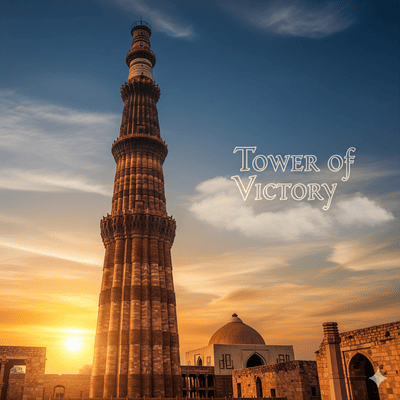
Jaipur The Pink City Of India
Overview
Jaipur the Pink City of India
Day wise Planning
Comfortable time to visit: August to April Albert Hall Museum
TheAlbert Hall Museum in Jaipur is the oldest museum of the state and functions as the state museum of Rajasthan, India. The building is situated in Ram Niwas garden outside the city wall opposite New gate and is a fine example of Indo-Saracenic architecture. It is also called the Government Central Museum. It was considered one of the best 19th century museums for the variety of its collections. It was renovated in 2008 and reopened as one of the most advanced museums in India.
Birla Mandir (Lakshmi Narayan Temple), Jaipur
A stunning modern Hindu temple built entirely of white marble by the B.M. Birla Foundation in 1988.
Dedicated to Lord Vishnu (Narayan) and his consort Lakshmi, the goddess of wealth.
Features three domes representing the three major religions that originated in India (Hinduism, Islam, Christianity), reflecting the country’s secular nature.
Intricate carvings and sculptures depicting mythological themes adorn the temple. The walls also feature carvings from the Gita and Upanishads, and outer walls display figures like Christ, Buddha, Confucius, and Socrates.
Located at the base of Moti Doongri hill, dominating the skyline of South Jaipur.
The temple looks spectacular when lit up at night.
A museum within the complex showcases the Birla family’s belongings and philanthropic contributions.
Moti Doongri Ganesh Temple, Jaipur
A Hindu temple dedicated to Lord Ganesha, situated atop Moti Doongri hill.
Believed to have been built in 1761 under the supervision of Seth Jai Ram Paliwal.
Houses a 500-year-old Ganesha deity, said to be brought from Udaipur.
The idol’s trunk is turned rightwards.
Built in the Nagara style and modeled after a Scottish castle, it features colorful decor, intricate carvings, impressive domes, and grand entrance gates.
A fair is organized every Wednesday, a day considered auspicious for Lord Ganesha.
Located next to the Birla Temple.
Timings: 5:30 AM to 1:30 PM and 4:30 PM to 9 PM, every day of the week.
Entry is free.
The fort of Moti Doongri, a replica of a Scottish castle and once a royal residence, is located adjacent to the temple, but it’s now private property and only opens to the public on Mahashivratri.
It’s a popular destination for celebrating Ganesh Chaturthi, where large displays of sweets like laddus are offered to Ganesha.
Patrika Gate
Patrika Gate, located at Jawahar Circle in Jaipur, Rajasthan, is a captivating example of Rajasthani architecture and a popular attraction for tourists and photographers alike.
Evening walk to Indira Bazar and Nehru Bazar for local shopping
Indira Bazaar and Nehru Bazaar are two prominent traditional markets in Jaipur, Rajasthan, known for their diverse range of goods and vibrant shopping atmosphere. Indira Bazaar is particularly known for textiles, automobile parts, and men’s wear, while Nehru Bazaar is famous for its traditional jootis (leather shoes) and fabrics
Day 2
City Palace
The City Palace of Jaipur is a magnificent and historic complex located in the heart of Jaipur, Rajasthan, India. It serves as a prominent landmark and a living testament to the city’s rich royal heritage, showcasing a captivating blend of Rajput, Mughal, and European architectural styles.
Jantar Mantar and Hawa Mahal
Hawa Mahal and Jantar Mantar are two prominent landmarks in Jaipur, India, near each other and other popular attractions like the City Palace.
Hawa Mahal
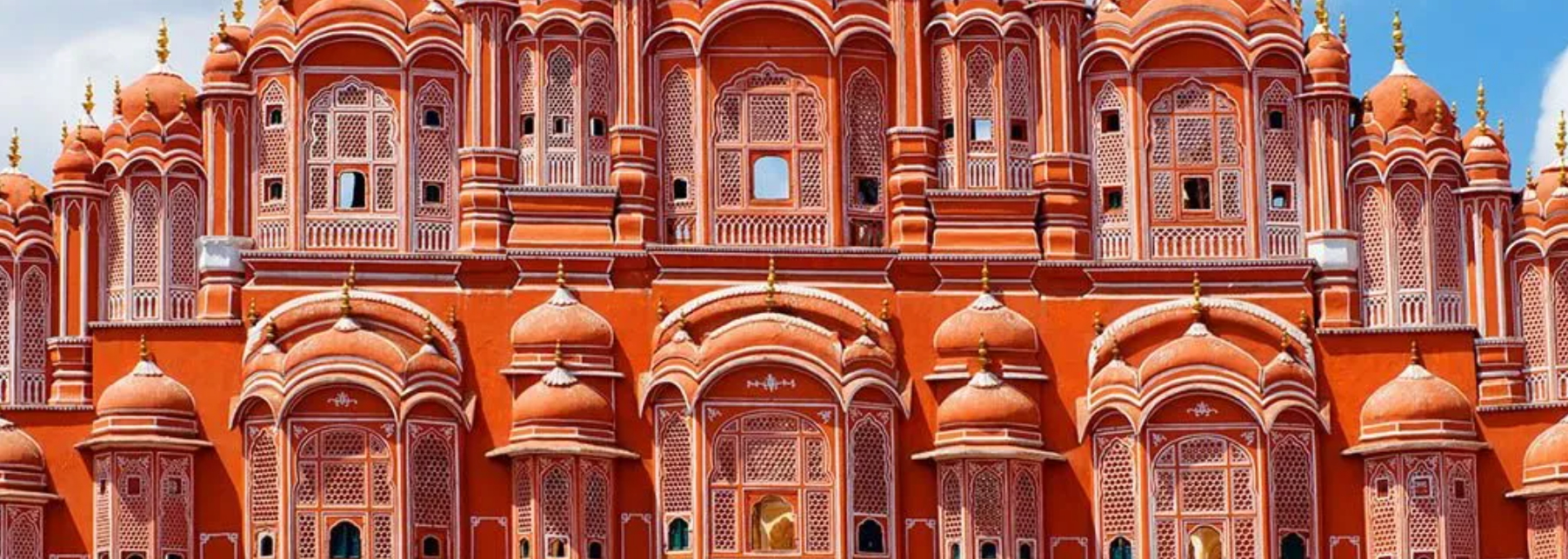
Palace of Winds: Known as the “Palace of Winds,” it’s a five-story palace built in 1799 by Maharaja Sawai Pratap Singh.
Purpose: The main purpose was to allow the royal women to observe street festivals and daily life while remaining unseen, due to the practice of purdah.
Jantar Mantar
Astronomical Observatory: It is a collection of 19 astronomical instruments built by Maharaja Sawai Jai Singh II in the early 18th century and completed in 1734.
Purpose: The instruments were used for astronomical observations, such as measuring time, predicting eclipses, tracking stars, and determining the position of celestial bodies.
Architecture: It is an open-air observatory comprising large-scale instruments made of stone and brass, including the world’s largest stone sundial.
Historical Significance: It’s a UNESCO World Heritage site and a significant example of India’s scientific and cosmological knowledge.
Visit Amber Fort
Amber Fort in Jaipur: A magnificent blend of history and architecture.
Amber Fort, also known as Amer Fort, is a renowned historical site in Jaipur, Rajasthan, known for its intricate artistry, breathtaking views, and strategic location. Situated atop a hill and overlooking Maota Lake, it is a stunning example of Rajput architecture with a fusion of Mughal influences. Built in the 16th century by Raja Man Singh I, the fort complex was expanded and renovated by successive rulers, solidifying its role as the former royal residence of the Kachwaha dynasty
Panna Meena Kund (Step Well)
Panna Meena ka Kund (Stepwell): A historical and architectural marvel in Jaipur.
Panna Meena ka Kund, also known as Panna Mian Kund or Baori, is a hidden gem located near the Amber Fort in Jaipur, Rajasthan. This ancient stepwell, dating back to the 16th century, showcases the ingenuity of ancient water management systems in the arid landscapes of Rajasthan.
Jaigarh and Nahargarh Forts
Jaigarh and Nahargarh Forts, both located in Jaipur, Rajasthan, are prominent historical landmarks offering unique perspectives of the city and its surrounding landscape. Jaigarh, known as the “Fort of Victory,” overlooks Amer Fort and served as a military stronghold, while Nahargarh, meaning “abode of tigers,” provides panoramic views of Jaipur city and was primarily a retreat for the royal family.
Jal Mahal
Jal Mahal: the water palace of Jaipur.
Jal Mahal, meaning “Water Palace,” is a stunning architectural marvel located in the middle of Man Sagar Lake in Jaipur, Rajasthan, India.
Evening walk to shops near
Ramganj Bazaar – Ramganj Bazar in Jaipur, Rajasthan, is a vibrant market known for its traditional goods, food, and bustling atmosphere.
Johri Bazaar – Johri Bazaar in Jaipur is a vibrant and historic marketplace, renowned for its dazzling array of traditional Rajasthani jewelry, textiles, and handicrafts.
Badi Chaupar – Badi Chaupar, also known as Manak Chowk, is a historic public square and bustling commercial hub in Jaipur, Rajasthan
Choti Chaupar – Choti Chaupar (also known as Amber Chowk) is another significant public square and commercial center within the walled city of Jaipur, Rajasthan. It’s a vibrant and historic location, playing a crucial role in the city’s layout and daily life
and
Chandpole Bazaar- Chandpole Bazaar, located in the heart of Jaipur’s walled city, is one of the city’s oldest and most vibrant marketplaces. It dates back almost three centuries, to the time of Jaipur’s founding, and is known for its traditional architecture with pink walls.
Day 3
Early morning walk to old walled city to take pictures at Hawa Mahal, walk to Govind Devji temple,and flower market.
The Hawa Mahal, also known as the “Palace of Winds”, is a magnificent and iconic landmark located in the heart of Jaipur, Rajasthan. It’s a five-storey palace built of red and pink sandstone, perfectly complementing Jaipur’s moniker as the “Pink City”
The Govind Devji Temple, located within the City Palace complex in Jaipur, Rajasthan, is a highly revered Hindu temple dedicated to Lord Krishna (in the form of Govind Dev Ji) and Radha.
Depart after lunch.
Inclusions
Transportation Mode
Policy
Policy details...